The web is drowning in beauty. Or at least, what passes for beauty these days — polished gradients, 8px border radii, hero sections that look like they were plucked from the same Figma community file.
Everything’s clean, frictionless, and perfectly aligned… and completely forgettable.
It’s not that beauty is bad. It’s that beauty has been industrialized. And in the age of AI, where a single prompt can spin up a “professionally designed” site in under a minute, that beauty has become suspiciously cheap.
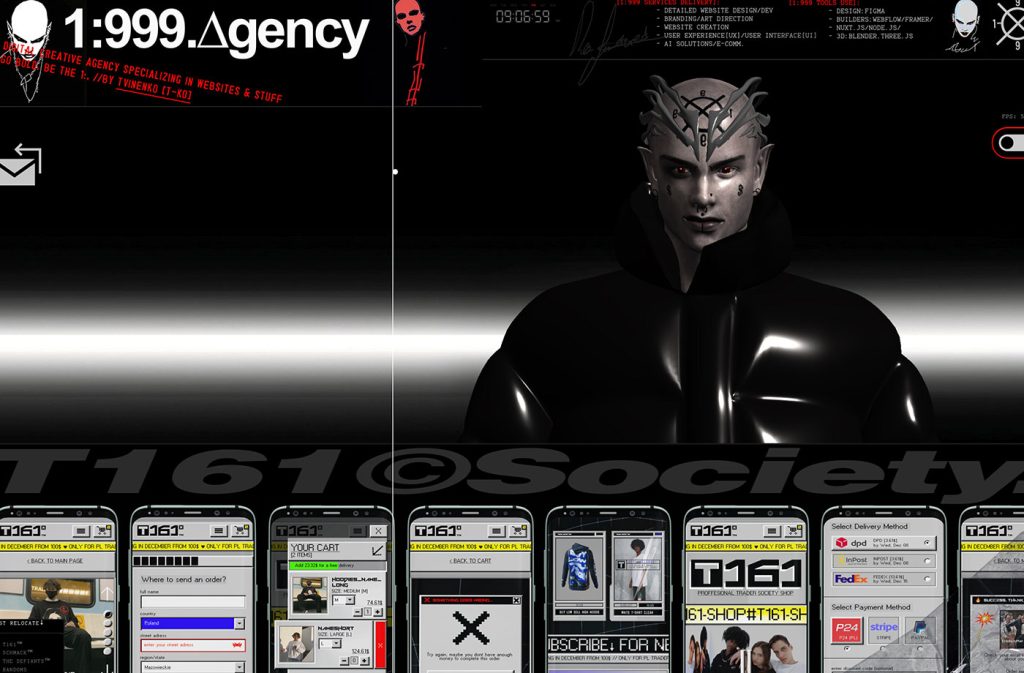
Which is why brutalism — raw, unapologetic, and often aggressively ugly — has never been more relevant. In a landscape where AI smooths every rough edge, brutalism’s jagged corners feel like a human fingerprint.
AI’s Polished Monoculture
AI has a tell. It doesn’t “design” — it averages.
Feed it a million beautiful layouts, and it will give you the most mathematically probable “beautiful” layout. Safe typography. Predictable hierarchy. Buttons that look like every other button in your bookmarks bar.
Framer’s “Generate Layout” button? It’ll give you something your investors won’t hate.
Figma’s “Make it pop” AI tweak? Congratulations, you now look like a mid-tier SaaS brand circa Q3 2024.
And this is the point: AI design defaults to safety. It works because safety converts. But safety also homogenizes.
When everything starts to look the same, the sites that stand out aren’t the ones with better gradients — they’re the ones that refuse to play the same game.
Brutalism as an Anti-AI Stance
Brutalism in design didn’t start as a trend — it started as necessity. In architecture, post-war brutalism embraced raw concrete and blocky forms because they were fast, functional, and honest. In early web design, brutalism meant “We don’t have the bandwidth to make this pretty.”
Now, it’s a choice. A deliberate rejection of the algorithm’s perfect symmetry.
In the AI era, brutalism isn’t just a style; it’s an act of resistance.
It says: “We’re not here to soothe you. We’re here to wake you up.”
True brutalism ignores the rules AI clings to:
- Don’t break the grid? Break it.
- Keep color harmonious? Hit them with neon on beige.
- Use standard padding? Let the text kiss the edge of the viewport.
These violations aren’t mistakes. They’re signals. They say: a human made this.
The Problem with “AI Brutalism”
Of course, AI will try to copy it. In fact, it already has.
You can prompt Midjourney or GPT-powered web builders for “brutalist design” and they’ll deliver something… technically brutalist. Fonts are big. Colors clash. Layout is jagged.
But here’s the thing: authentic brutalism has intent.
AI-generated brutalism often looks like a parody because it doesn’t understand why the rules are being broken — it just knows they’re broken. It’s the difference between a punk band smashing a guitar to make a point and a corporate ad agency smashing a guitar because they read punk was cool in a trend report.
That’s why real brutalism hits different — the “mistakes” are engineered to provoke, not just to deviate.
Why Brutalism Hits Different in 2025
- It feels human. In an age of generated everything, imperfection becomes a luxury good.
- It’s memorable. You won’t remember the AI-perfect fintech landing page. But you’ll remember the site that made you scroll sideways and blink twice.
- It resists commodification. You can’t drag-and-drop your way to authentic brutalist chaos. You have to earn it.
- It’s punk for pixels. In a design economy obsessed with frictionless experiences, brutalism reminds us that friction is where the interesting things happen.
The Risk You Have to Take
Let’s not sugarcoat it: brutalism can alienate.
Corporate clients don’t want their checkout process to feel like it was designed on an IBM ThinkPad in 1998. Investors don’t want “confusing” UX.
But for brands that trade in edge, brutalism sends a signal: We’re not here to please everyone.
And that’s the magic — in a homogenized AI web, brutalism becomes a filter. The people who “get it” will lean in harder. The ones who don’t were never your people anyway.
The Future: Algorithm-Proof Design
Here’s my prediction: Brutalism will become the punk rock of the web — not the watered-down pop-punk version, but the sweaty, loud, possibly dangerous version.
AI will get better at imitating messy, but it will never match messy with meaning. Designers who live inside the brutalist mindset will always stay ahead, because they’re not just rearranging pixels — they’re making cultural statements AI can’t parse.
The AI era will be defined by two types of design:
- Designs that are frictionless, safe, and instantly forgettable.
- Designs that make you stop, squint, and ask, “What the hell is this?”
Guess which one people will remember?
If AI makes the web a sea of perfect, polite, and predictable interfaces, brutalism might be the only honest aesthetic left. Because sometimes the ugliest thing you can make is the most beautiful act of rebellion.