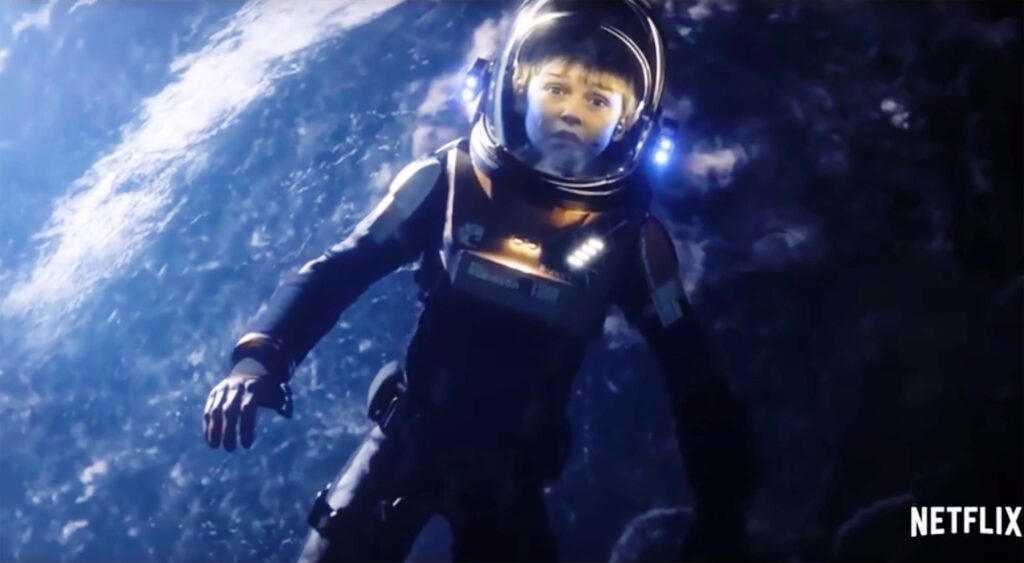

For years, we thought video was the peak of online storytelling—painstakingly edited YouTube explainers, expensive brand commercials, polished Netflix-style productions.
Then AI video swaggered in, ripped up the script, and declared: “You don’t need cameras, actors, or even ideas anymore. I’ll handle it.”
The result? A flood. Not a trickle, not a wave—a full-scale tsunami of auto-generated videos that are reshaping everything from TikTok trends to corporate marketing, and not always for the better.
The Rise of Auto-Generated Faces
At first, AI video was a gimmick—deepfakes of Tom Cruise winking on TikTok, Obama giving a speech he never gave, or someone’s cat reciting Shakespeare. Now, it’s an industry.
Platforms like Runway, Pika, and HeyGen let anyone spin up slick-looking content in minutes. Need a fake CEO to deliver your product pitch? Done. Want your blog turned into a talking-head video overnight? Easy.
The controversy is obvious: what happens when you can’t tell if a person in a video is real? When your favorite influencer could be an algorithm wearing a mask? We’ve reached a moment where “seeing is believing” is officially dead.
TikTok, YouTube, and the Flood of Synthetic Content
Scroll through TikTok right now and you’ll stumble across dozens of AI-generated storytime videos—some dystopian short films, some AI-narrated life lessons with uncanny avatars blinking awkwardly at you. They’re cheap, fast, and endless.
On YouTube, faceless “cash cow” channels are now entirely AI-driven: scripts by ChatGPT, voice by ElevenLabs, visuals stitched together by Runway or Pika. The human role is reduced to “upload and collect ad revenue.” It’s the content equivalent of factory farming—mass production at scale, with quality left gasping somewhere in the corner.
And the scary part? Audiences don’t always care. If the dopamine loop keeps spinning, whether the video was made by a person or an algorithm becomes irrelevant.
The Corporate Gold Rush
Brands love AI video because it kills budgets. Why hire an entire crew when a prompt gives you an explainer video in five minutes? Why pay a spokesperson when you can rent a synthetic talking head that never asks for a raise?
This efficiency is intoxicating, but it’s also stripping creative industries bare. Video editors, actors, animators—they’re all watching AI undercut their rates.
In the short term, marketing teams cheer. In the long term, we risk a creative monoculture where everything looks and feels the same, because all of it is generated by models trained on the same datasets.
Truth, Trust, and Total Saturation
The internet already drowns us in more video than anyone can watch in a lifetime. Now AI is multiplying that by a factor of infinity. The consequence is simple: saturation.
When every brand, influencer, and 13-year-old in a basement can churn out thousands of videos a month, the value of any individual video plummets.
Worse: trust erodes. Political campaigns can fabricate convincing smear videos. Bad actors can generate fake evidence. Even memes could become propaganda in disguise. When video stops being proof, society loses one of its last shared “truth anchors.”
The Counterpoint: Creativity Unleashed
Here’s the unpopular opinion: it’s not all doom. AI video also means an explosion of creativity for people who couldn’t otherwise afford the tools.
An indie filmmaker can storyboard an entire scene without a budget. A teacher can generate personalized lesson videos for students in minutes. A designer can prototype entire campaigns overnight.
But creativity is only “unleashed” if people use AI as a collaborator, not a replacement. The problem is that capitalism incentivizes the opposite—cheaper, faster, more of it. The artistry risks getting buried under noise.
What Happens Next?
We’re entering a weird paradox: video is more accessible than ever, but also less trustworthy than ever. Platforms will likely respond with watermarks, detection algorithms, or mandatory disclosure tags. None of that will stop the flood—it’ll just label it.
The more controversial prediction? Within a decade, the majority of online video won’t be filmed—it’ll be generated. The “real” internet will become niche, almost artisanal, like vinyl records or handmade furniture. A live-stream of a human face might carry more authenticity than a Hollywood blockbuster.
And maybe that’s the strangest twist: in an AI-dominated video ecosystem, the only premium left will be human presence.